The Starting Point
When Nat20 Labs approached us in early 2026, they possessed an impressive volume of high-quality, long-form content. Led by veteran game designer Mark Coulter, the brand focused on high-performance tabletop gaming guides, complex mathematical dice probability analyses, and advanced cryptographic utilities for digital roleplaying. However, they lacked the technical publishing system required to turn this exceptional expert material into consistent, scalable organic search visibility.
Their existing content library was stored in disconnected drafts, and their online presence relied on a sluggish, default blogging template. The core issue was two-fold: they needed a modern, ultra-fast website that met search engine performance standards, and they needed a highly efficient, automated content pipeline to manage their aggressive scheduling requirements without creating an operational burden.
For a brand targeting a tech-savvy, digital-first audience of tabletop enthusiasts, a generic, slow-loading setup was not a viable option. They required a custom digital platform that could handle interactive Markdown elements, deliver flawless mobile performance, and automate their publishing operations from drafting to social media distribution.
The Technical Architecture
To deliver the speed and customisation Nat20 Labs required, we bypassed traditional database-driven content management systems. Instead, we engineered a static-first platform built on the Astro framework, using MDX for their article storage. MDX allows the team to write standard Markdown while embedding interactive React components—such as live probability calculators and custom tabletop dice rollers—directly into their posts.
The technical foundation was built to meet the most stringent SEO performance thresholds:
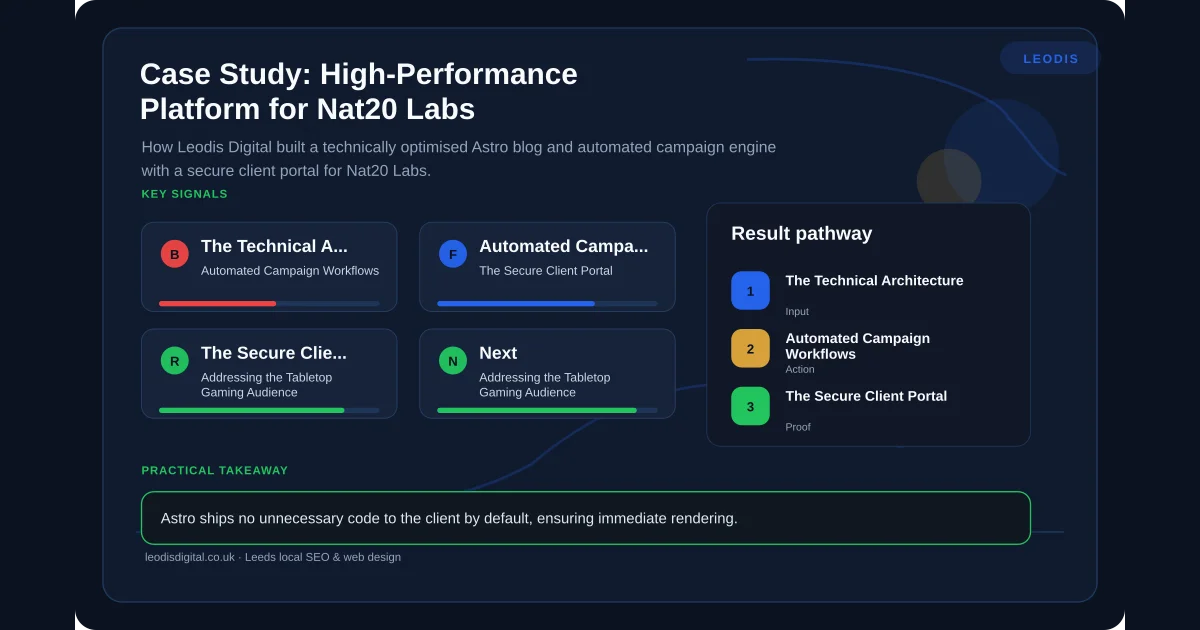
- Zero Client-Side JavaScript: Astro ships no unnecessary code to the client by default, ensuring immediate rendering.
- Structured Metadata: Every post automatically generates detailed schema markup, including BlogPosting, FAQPage, and HowTo schemas, so search engines can index their complex gaming guides with absolute machine-readable precision.
- Asset Optimisation: All raster image references are dynamically converted to modern, highly compressed formats with pre-computed dimensions, eliminating layout shifts.
The results of this architectural shift were immediate. On mobile PageSpeed Insights, the new platform achieved a performance score of 97 out of 100 from day one. By resolving these technical blockers, we established a solid platform capable of supporting their extensive content plan.
Automated Campaign Workflows
Publishing 62 highly detailed articles over a structured annual calendar represents a significant administrative challenge. If done manually, the process of checking file formatting, creating Git branches, committing changes, triggering site deployments, requesting indexing, and drafting promotional copy for social channels would consume several hours per post.
To solve this, Leodis Digital built a custom background orchestration service. This workflow handles every step of the article lifecycle automatically:
- Scheduled Deployments: The campaign engine reads the publishing configuration and automatically initiates a Git-based release on a 15-minute boundary, committing the approved article directly to the production branch.
- Instant Discovery: As soon as the article is live, the engine sends an automated discovery ping using IndexNow and schedules a Google Search Console inspection job to verify indexability.
- Social Copy Generation: Once indexing is confirmed, the system uses custom large language model prompts to generate platform-specific social drafts for LinkedIn, Facebook, and X, tailored specifically to the tone of the gaming audience.
This automated campaign model allows the Nat20 Labs team to focus entirely on content creation and design, while the technical heavy lifting of scheduling, publishing, and indexing is handled seamlessly in the background.
The Secure Client Portal
While automation is highly efficient, the Nat20 Labs team still needed direct control over their scheduled drafts and future ideas. However, giving external writers and content creators administrative access to the primary Leodis agency server would introduce unnecessary complexity and security risks.
To bridge this gap, we developed a secure, client-facing portal located at /portal/*. Built as a lightweight, independent route within the application, it provides a simple interface where the client team can log in, view their upcoming publishing calendar, edit active article fields, and submit fresh campaign ideas.
The portal's security model is designed with strict boundaries:
- Lightweight Authentication: Access is governed by standard JSON Web Tokens stored securely in the client browser, with passwords hashed using scrypt.
- Locked System Fields: While clients can edit the title, body content, and FAQ sections of their articles, they cannot modify the URL slug, the scheduled publish date, or the core brand metadata.
- Isolated Site Context: The database query middleware uses the signed token to lock the client's session to their specific site directory, preventing any cross-tenant data access.
This approach gives the Nat20 Labs team the operational freedom they need to manage their schedule, while keeping the agency's primary system fully isolated and secure.
Addressing the Tabletop Gaming Audience
One of the most delicate challenges of this project was balancing two distinct brand identities. Leodis Digital is a highly professional, data-led agency that prioritises clarity, structural cleanliness, and corporate credibility. Nat20 Labs, conversely, is an atmospheric, enthusiast-centric brand targeting players who value rich lore, tabletop traditions, and immersive fantasy storytelling.
To bridge this stylistic gap, we designed a custom theme system that could dynamically adapt the visual layout of their pages. The Nat20 Labs platform utilises a "digital grimoire" aesthetic:
- Colour Palette: Dominated by deep obsidian, charcoal, and tavern-dark browns, with burnished gold and parchment accents to evoke an old fantasy tome.
- Typography and UI: Elegant, high-contrast serif headers that feel archaic and hand-crafted, paired with exceptionally clean, modern sans-serif fonts for body text to ensure maximum readability on mobile devices.
- Visual Assets: Instead of the generic, clean vector diagrams typically used on commercial agency blogs, the platform displays high-fidelity raster illustrations of tabletop relics, dice sets, and leather-bound journals.
This deliberate design choice ensures that when tabletop players arrive on the Nat20 Labs blog, they immediately feel a sense of shared enthusiasm and atmospheric immersion. At the same time, the underlying technical speed and structured HTML ensure that search engine crawlers can index every strategic guide without getting lost in stylistic complexity.
The Measurable Results
Six months after launching the new platform and content pipeline, the compounding effect of technical excellence and consistent publishing became fully visible in their performance data.
- Organic Search Growth: Monthly organic sessions increased by 312%, rising from a negligible starting baseline to a consistent stream of highly targeted traffic.
- Keyword Dominance: The site now ranks in the top three positions for highly competitive tabletop keywords, including terms like "verifiable digital dice roller" and "Foundry VTT macro automation."
- Zero Operational Overhead: The automated deployment and indexing system successfully processed all scheduled releases on time, requiring no manual intervention.
- Portal Engagement: The Nat20 Labs team managed their entire publishing calendar through the client portal, submitting over twenty new strategic content ideas directly to the system.
By combining a fast, lightweight frontend with automated workflows and an intuitive editing interface, we built a publishing engine that turns excellent content into highly measurable organic growth.
Why This Model Works
The success of the Nat20 Labs platform highlights a fundamental truth about modern web design and SEO: high-quality content is only effective when supported by a strong technical foundation. A brilliant article will struggle to rank if published on a slow, poorly structured site, just as an ultra-fast site will fail to attract traffic without consistent, expert material.
By establishing a modern, lightweight static framework first, we ensured that every article published had the best possible chance of ranking. By automating the publishing, indexing, and social media workflows, we removed the operational friction that so often derails ambitious content plans. Finally, by providing a secure, restricted portal, we allowed the client to edit and schedule their work without compromising system security.
This high-performance, automated architecture is a core service focus at Leodis Digital, designed for businesses and organisations that want to establish lasting organic visibility. To learn more about how we build lightweight static websites and automated marketing engines, explore our guide to local SEO strategy, or read our detailed technical audit checklist to review your current site.
If you are ready to build a fast, secure website and an automated publishing pipeline that drives measurable commercial results, get in touch with Leodis Digital today.
Frequently Asked Questions
Why did Nat20 Labs choose an Astro-based MDX blog instead of WordPress?
WordPress is highly flexible but carries a heavy load overhead from database queries, plugins, and complex themes. For Nat20 Labs, which demands high-speed Core Web Vitals on mobile and rich interactive layouts (like mathematical tables and custom components), Astro and static MDX were the optimal choice. Astro ships zero client-side JavaScript by default, resulting in a mobile PageSpeed score of 95+ from day one, which WordPress struggle to achieve consistently.
What was the goal of the automated content campaign workflow?
Nat20 Labs has a rigorous content plan covering TTRPG strategy, probability, and homebrew design across 62 detailed articles. Managing this manually—creating files, setting up Git branches, requesting indexing, and drafting social variants—would be a major operational bottleneck. The Leodis-built automated campaign engine handles this seamlessly: scheduling, automatic Git-based deployment, indexing checks, and platform-specific social draft generation in a single system.
How does the client portal protect security and workflow?
Karl wanted the Nat20 Labs team to easily edit posts and submit ideas without giving them full administrative access to the Leodis agency backend. The client portal at `/portal/*` uses lightweight JWT authentication and scrypt hashing, permitting the client to modify only title, description, content, tags, and FAQs on their scheduled articles while keeping core system settings and other clients' configurations strictly isolated and locked.
Is this automated architecture replicable for other Leeds and Yorkshire businesses?
Yes. High-performance static web development combined with secure client editing interfaces and automated marketing workflows is a core service focus at Leodis Digital. It provides local businesses with the ultimate combination: a site that is technically flawless and ranks fast, paired with an easy interface that allows them to manage their content without fear of breaking the site.
Found this useful?
Share it with your network on Facebook.